
Binance: Complete Review
Binance remains one of the biggest names in crypto trading because it combines deep liquidity, broad market coverage, aggressive pricing, and a product stack that goes far beyond basic spot buying and selling. This review consolidates the best information from our older Binance pages into a single canonical location, so users and search engines have one clear URL for fees, security, screenshots, pros, cons, and practical guidance on who Binance actually suits in 2026.
Review Trust Details
Reviewed by: Yeti Crypto Bazaar Editorial Team - Senior Review Analyst
Last updated: March 6, 2026.
How we evaluate
- Reviewed fee positioning, product availability notes, and platform structure against Binance product pages, support materials, and public exchange documentation.
- Reviewed security controls such as 2FA, anti-phishing features, device management, and withdrawal protections.
- Assessed liquidity, execution quality, order types, and market depth relative to KuCoin, Gate.io, HTX, and Bybit.
- Reviewed the structure of spot, margin, P2P, bots, and earn workflows using current product materials and interface screenshots.
Recommended Platform
Affiliate disclosure: this page may include partner links. We may earn a commission at no extra cost to you.
Top Reasons Traders Choose Binance
- High liquidity on major pairs often improves order execution and reduces slippage for active traders.
- One account can cover spot trading, advanced order flow, P2P access, earning tools, and native bot features.
- Fee positioning is usually competitive enough to keep Binance in the short list for cost-conscious users.
For broader context, use the exchange reviews hub, compare with Gate.io, KuCoin, HTX, Bybit, and read our crypto risk management guide before funding a trading account.
Contents
Jump to the section you need
Quick Overview
Binance is built for users who want a large exchange ecosystem rather than a stripped-down purchase app. Its core strengths are volume, breadth, and flexibility. A beginner can buy major assets through a simple spot interface, while a more experienced trader can move into advanced charting, conditional orders, automation, and deeper market tools without leaving the same account environment. That said, the size of the platform can also be a drawback. Binance gives you more options than many competitors, but it expects you to manage that complexity responsibly.
Market Context
The crypto exchange market is crowded, but very few platforms consistently compete at Binance scale. In practice, that matters because liquidity is not just a vanity metric. It affects how tightly spreads hold, how fast orders fill, and how painful large entries or exits become during volatile periods. Exchanges with weak books can look cheap on paper and still cost users more because of slippage, thin execution, or poor market depth in less active pairs.
Binance also competes in a market shaped by regulation, regional restrictions, and changing product access. That means the exact experience can vary by user location and verification status. This is one reason a review should focus on fit, not just features. A platform can be strong overall and still be the wrong choice if the services you want are restricted where you live or if your risk tolerance does not match the products you intend to use.
Features and Functionality
Trading and Markets
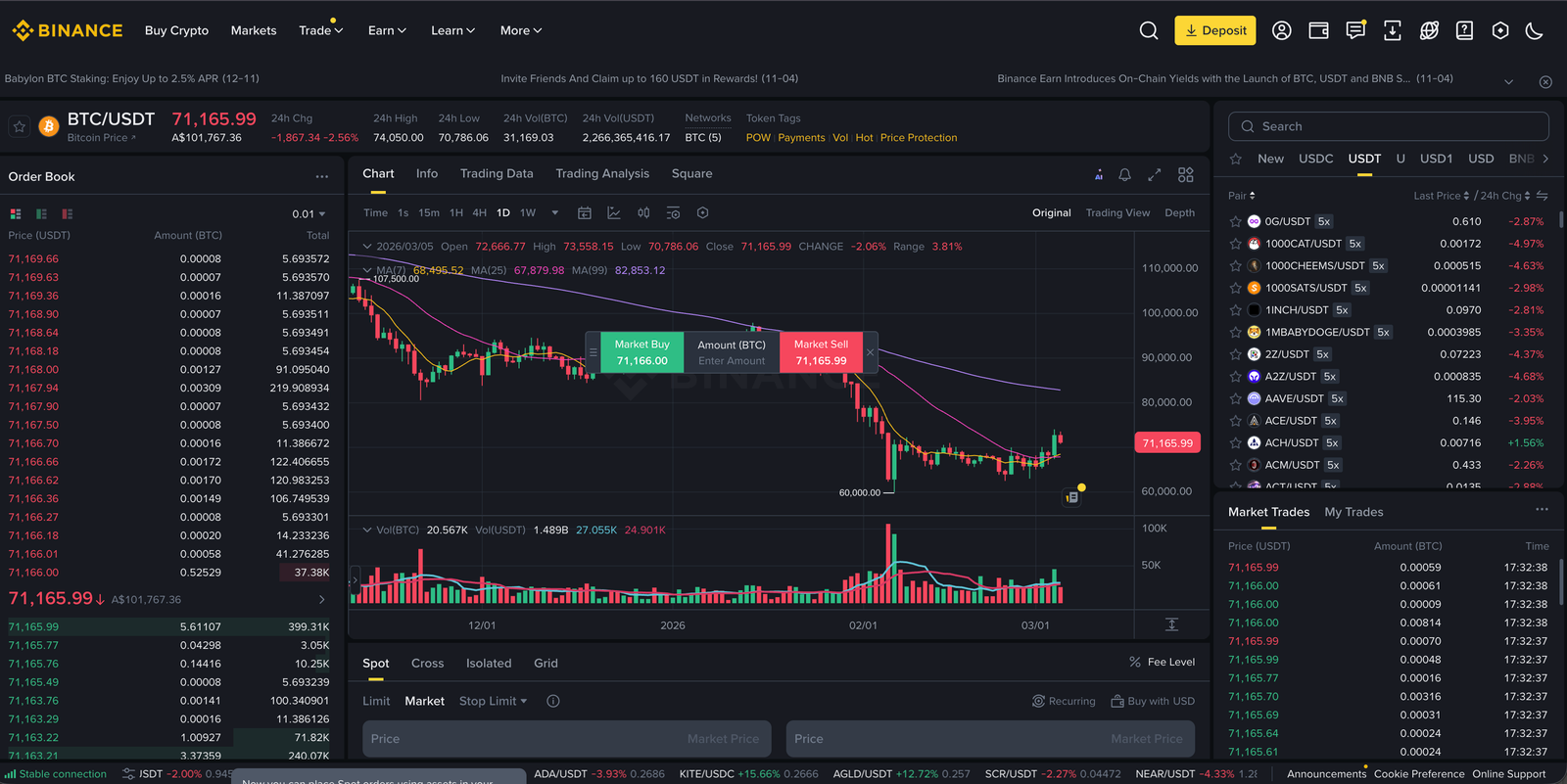
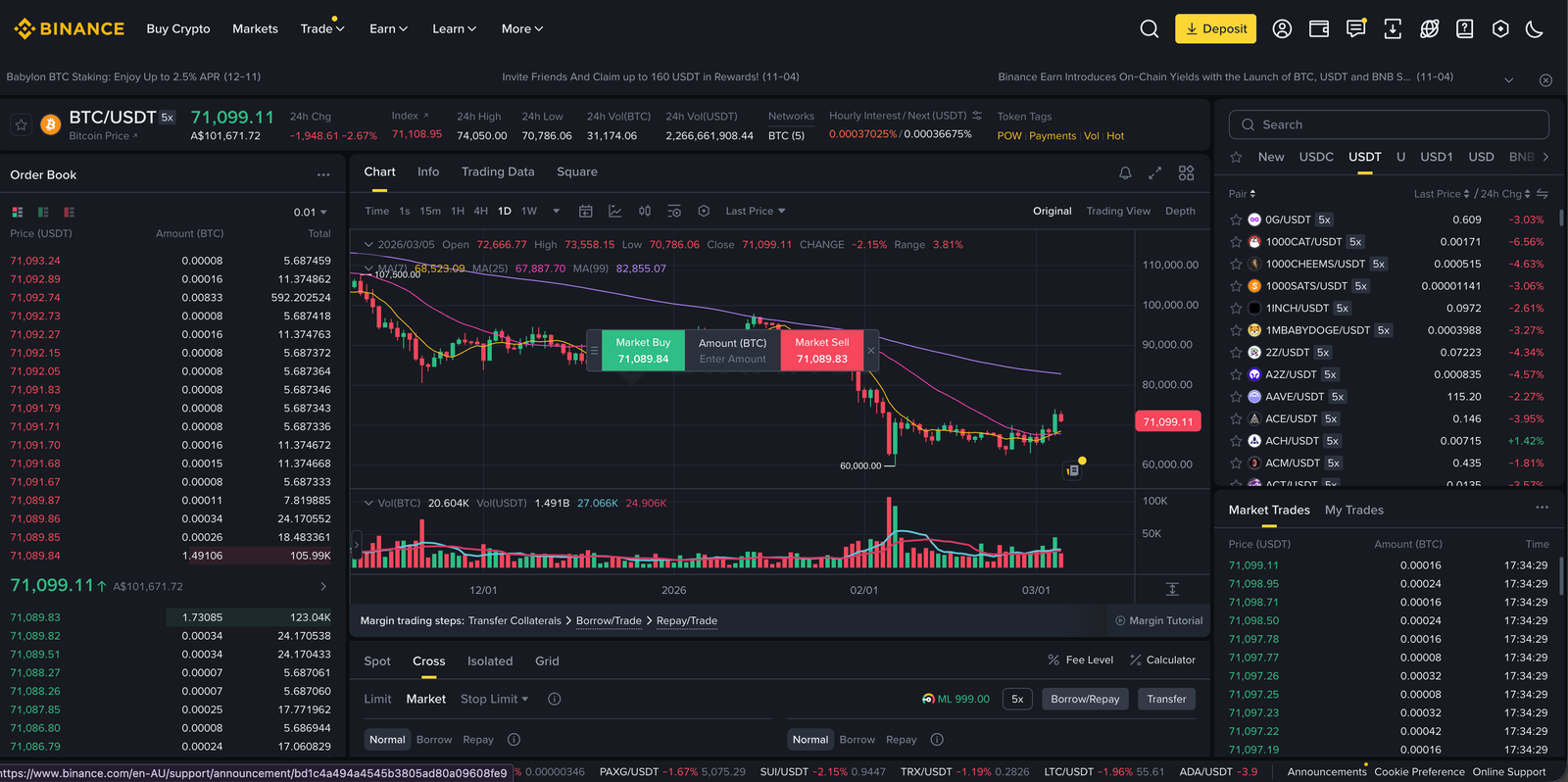
- Spot and margin markets with strong liquidity on major trading pairs.
- Perpetual and futures products for advanced users in supported jurisdictions.
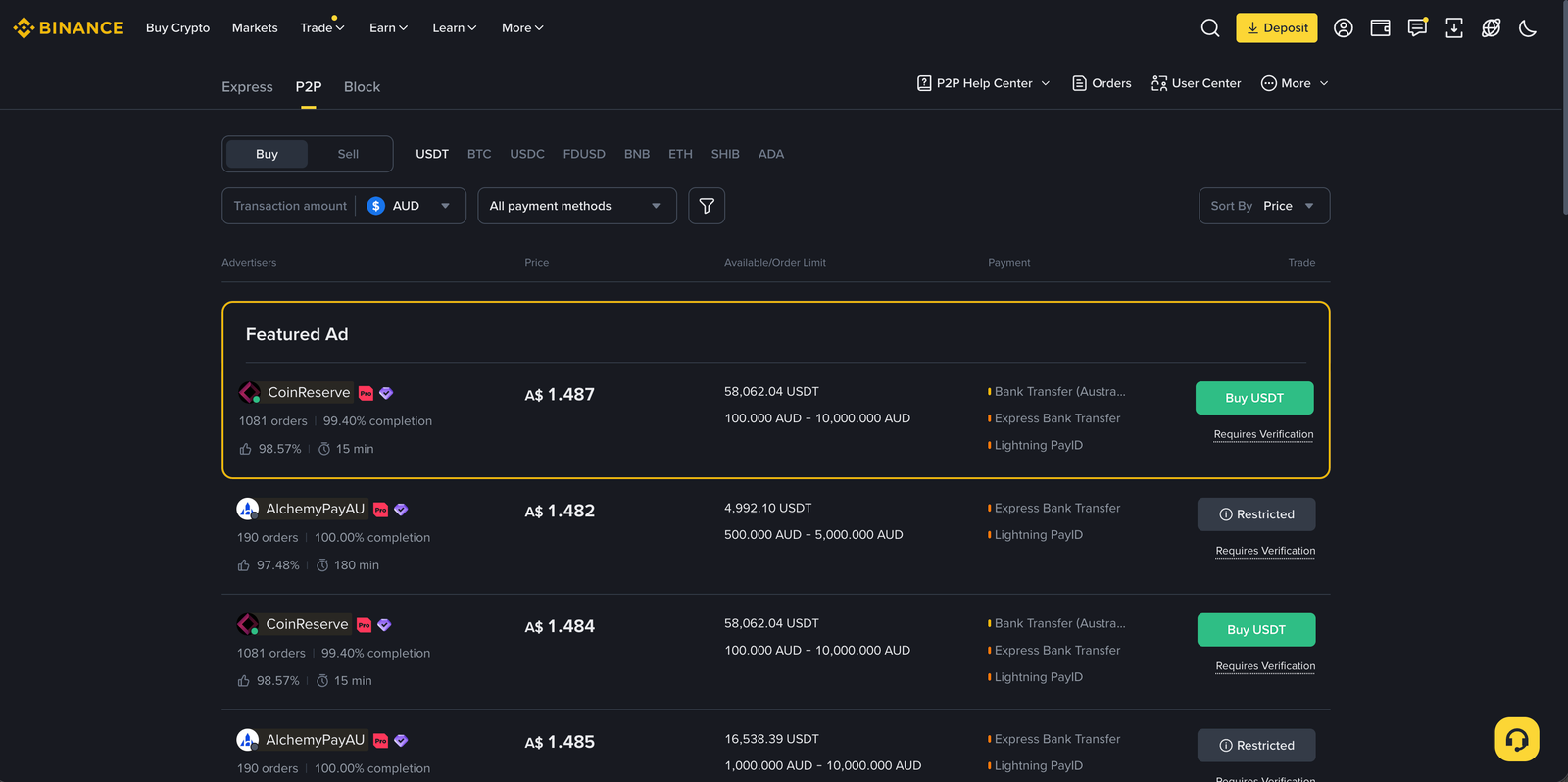
- P2P options and fiat on-ramp or off-ramp paths in regions where they are available.
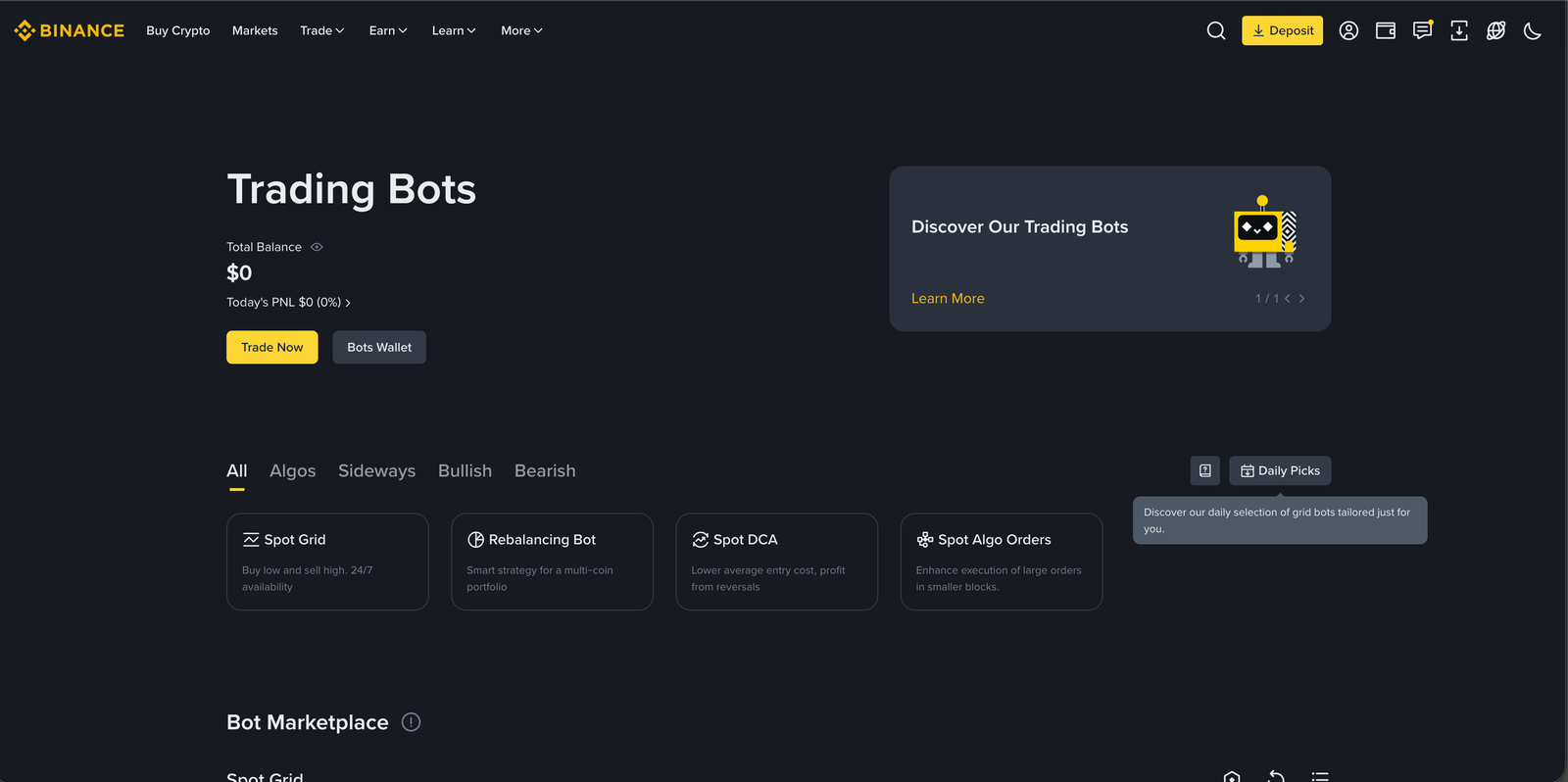
- Native bot workflows including grid and DCA styles for users who want simple automation.
For many users, Binance is attractive because it reduces the need to stitch together multiple services. You can go from basic market buys to more advanced execution tools without migrating funds between platforms. That convenience has real value, especially for traders who want portfolio management, order control, and fast access to multiple markets inside one dashboard.
Product Depth
Platform Tools
- Advanced order controls and charting workflows for more active traders.
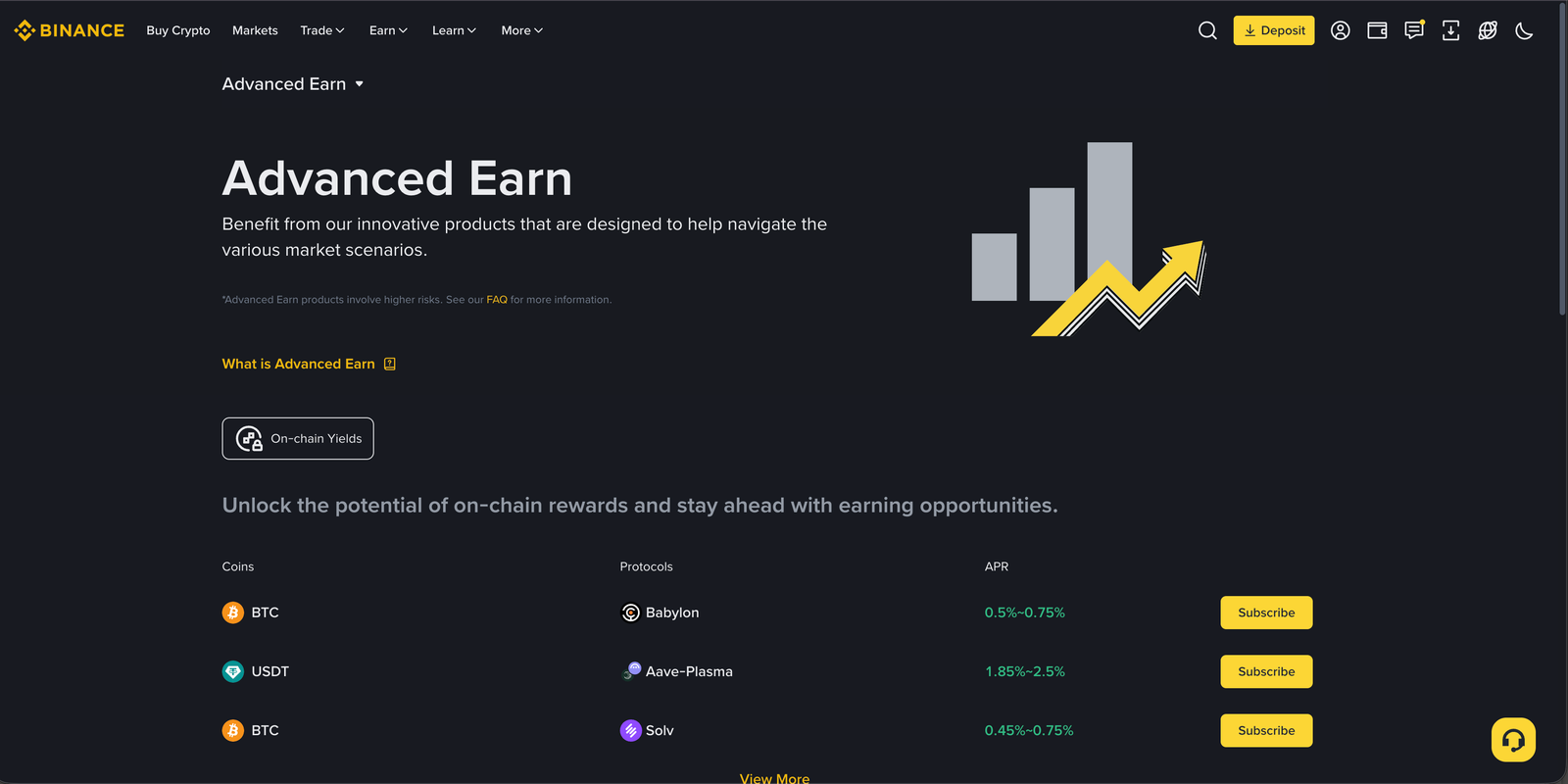
- Earning products with different yield profiles and risk tradeoffs.
- API support for external trading software and portfolio tooling.
- Large documentation, support, and user-education footprint.
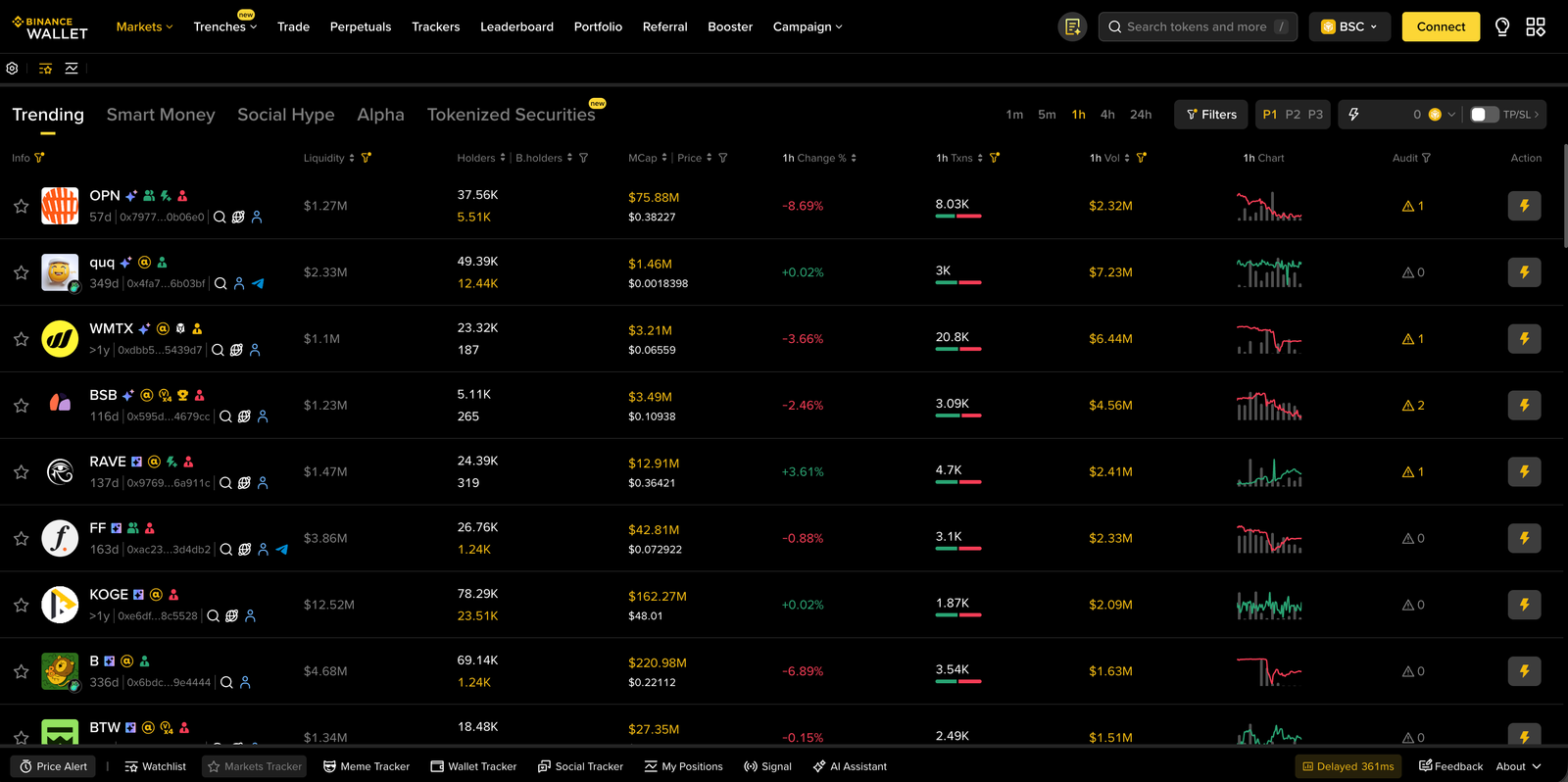
Binance also performs well as a research and monitoring environment. Users can scan markets, check depth, evaluate categories of assets, and compare multiple instruments quickly. For experienced traders, this makes Binance more than a place to execute orders. It becomes part of the decision-making workflow.
Security Features
Platform Security
- Layered custody architecture and internal risk controls.
- Monitoring systems for suspicious activity and account anomalies.
- Operational response processes and user-protection mechanisms.
Binance is large enough that security should be evaluated on two levels: platform architecture and user behavior. At the platform level, Binance has the resources to operate with more mature monitoring and control frameworks than smaller exchanges. At the user level, that advantage disappears quickly if you do not configure your account correctly. A strong exchange cannot protect users who leave basic defenses off.
Account Security
User Controls
- 2FA, anti-phishing code, and device or session controls.
- Withdrawal address controls and additional verification layers.
- Login alerts, account activity visibility, and risk notices.
If you use Binance, treat the security setup as part of the onboarding process, not an optional extra. Enable two-factor authentication immediately. Set an anti-phishing code. Review active sessions. Use withdrawal protections where available. Traders who skip these steps often underestimate how much risk is created by convenience habits, especially when assets remain on an exchange for active trading.
Fee Structure
Spot Trading Fees
- Generally sits in the low-fee category for major spot trading activity.
- Tiered pricing can improve for higher-volume users or eligible discount settings.
- Withdrawal and network costs should be checked asset by asset before moving funds.
Binance earns much of its reputation from pricing and liquidity together. Cheap trading is not useful if books are thin, and deep books are not enough if fees are uncompetitive. Binance typically performs well on both dimensions, which is why it remains a benchmark comparison in exchange reviews. Still, users should verify live fee schedules instead of relying on static screenshots, because promotions, tiers, and network costs can change.
Fee Structure
Derivatives and Other Products
- Derivatives fee schedules differ from spot fee schedules.
- Funding and financing costs vary by product, market, and holding period.
- Earn products require separate risk analysis beyond headline returns.
The biggest mistake users make is treating all Binance costs as one line item. Spot, futures, margin, withdrawal networks, and earning products all create different cost profiles. If your use case is basic spot accumulation, Binance is often straightforward. If your use case includes leverage, borrowing, or high-frequency automation, the effective cost picture becomes more complex and should be reviewed in detail.
Who Binance Is Best For
Binance is best for users who want a powerful, all-in-one exchange and are willing to spend time learning the platform properly. Active traders, users who value deep books on major pairs, and people who want access to multiple tools from one dashboard will usually find Binance compelling. It can also work well for serious beginners, but only if they stick to core spot functions at first and avoid drifting into leverage or complex product areas before they understand the risks.
Binance is less suitable for users who want the simplest possible onboarding experience or who prefer a very minimal interface. It is also a weaker fit when regional restrictions remove access to the products that make Binance attractive in the first place. If your local availability is limited, a competitor with fewer tools but clearer access may be the better option.
Pros
- Strong liquidity and order execution on major markets.
- Large ecosystem covering spot, bots, P2P, and additional products.
- Competitive fee positioning for cost-aware traders.
- Robust account-security controls when configured correctly.
- Useful for both direct execution and broader market monitoring.
Cons
- Interface complexity can overwhelm users who only need a basic buy-and-hold experience.
- Product availability varies by region, regulation, and verification status.
- Advanced tools can increase risk exposure if users move too quickly into leverage or automation.
- Some costs and access rules require careful checking instead of relying on assumptions.
Verdict
Binance remains one of the strongest exchange options for users who care about liquidity, product breadth, and cost efficiency. It is not the simplest exchange, and it should not be treated casually, but for traders who value execution quality and access to a broad toolset, it is still a serious benchmark. The right way to use Binance is with discipline: configure security first, confirm regional availability before signup, stay within products you understand, and compare it against alternatives such as KuCoin, Gate.io, HTX, and Bybit based on your actual trading style.
Quick Comparison
| Exchange | Fee Positioning | Liquidity | Best For |
|---|---|---|---|
| Binance | Low | High | Active traders who want depth and broad tools |
| KuCoin | Low | Good | Altcoin-focused users and broader listings |
| Gate.io | Competitive | Good | Users seeking more niche token access |
| HTX | Competitive | Good | Traders comparing regional access and interface fit |
| Bybit | Competitive | Good | Users focused on trading-first workflows |
Platform Screens
These Binance screenshots show the current layout we reviewed, including spot markets, margin, P2P, trading bots, earn tools, and the general exchange overview. They help confirm that this review is based on the current platform experience rather than a thin placeholder page.
 Create Account on Binance
 Create Account on Binance
 Create Account on Binance
 Create Account on Binance
 Create Account on Binance
 Create Account on Binance
Frequently Asked Questions
Is Binance safe?
Binance can be used safely when account protections are configured correctly. The platform offers strong security controls, but users still need to enable 2FA, anti-phishing settings, session reviews, and withdrawal protections.
What exchange has the lowest fees?
There is no universal answer because effective cost depends on volume, market, and product type. Binance is usually competitive on spot fees, but users should compare the live fee page with KuCoin, Gate.io, and other alternatives before trading.
Should beginners use spot or futures?
Beginners should usually stay with spot trading until they understand execution, custody risk, and volatility. Futures add leverage and liquidation risk, which makes mistakes more expensive.
Does Binance support bots?
Yes. Binance includes native automation tools and also supports API-based workflows for external bot platforms. Users should test strategies carefully and apply position sizing and risk controls.
Is Binance better than KuCoin?
Binance often wins on liquidity and overall depth, while KuCoin can appeal to users focused on a different altcoin mix or different workflow preferences. The better option depends on what you actually trade.